However you plan to represent your brand online, personal or business, one move is close to free and almost always worth it:
Put your brand name on every link you share.
A branded link does three things at once. It builds trust, because people can see where the click leads. It raises brand awareness with every share. And it earns more clicks than an anonymous shortener ever will.
So do not do this:
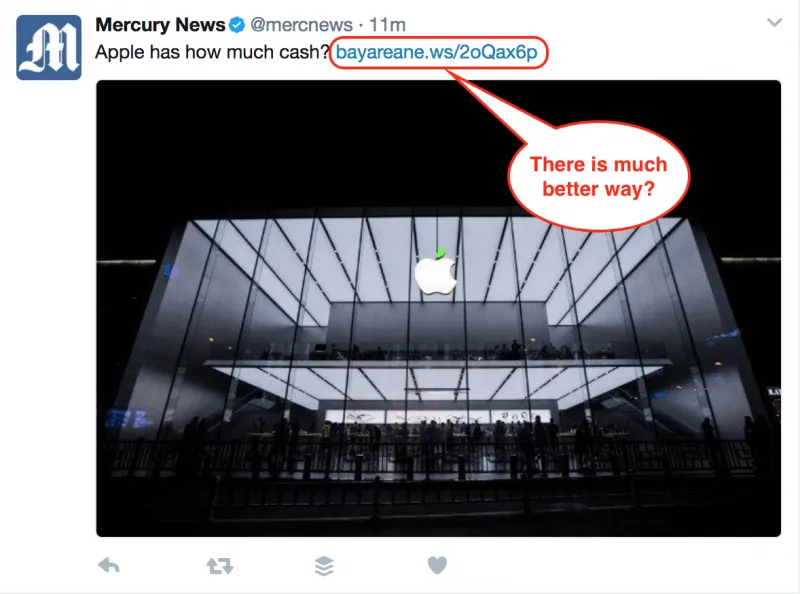
Nobody knows what sits behind a bit.ly or goo.gl link. That uncertainty costs you clicks. Even a half-branded choice falls short: the Mercury News shortens to bayareane.ws, which does not obviously belong to mercurynews.com. Compare that with Apple, which turns apple.com/news into the instantly recognizable apple.news/mol42. The destination is clear. The brand travels with the link.
Do this instead:
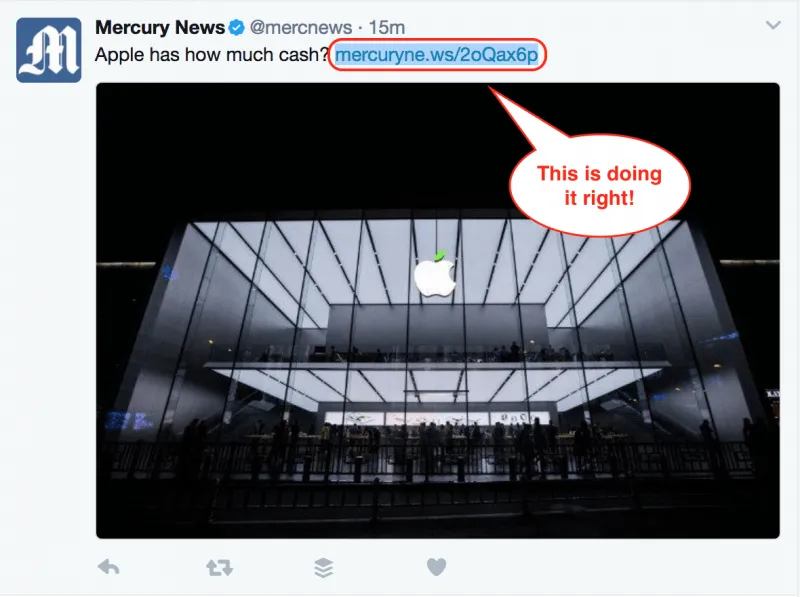
Here are a few high-leverage places to put branded short links to work for your personal and business brand.
- Your X bio
A custom link built from real words earns more trust and more clicks than a random string. Here is mine:
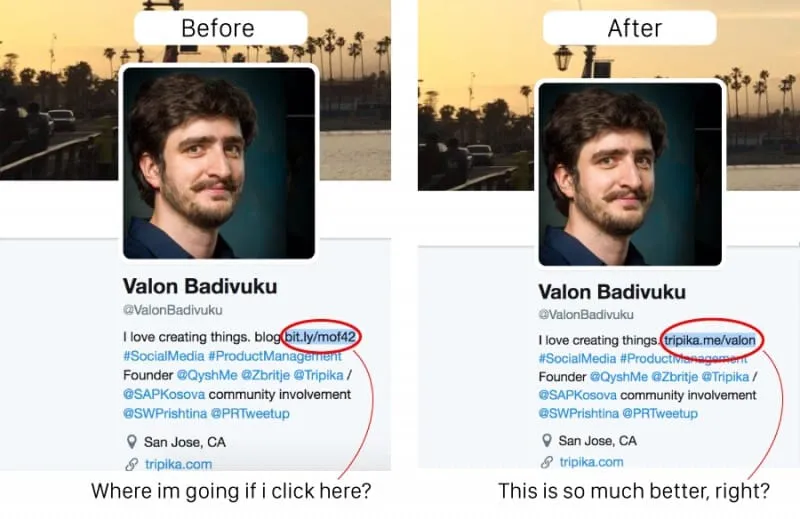
The gains are real. Sam Hurley put it plainly: “Changing from goo.gl to a branded link increased my click-through rate by 98%.”
- Your email signature

Most of us send dozens of emails a day, so a branded link in your signature quietly compounds into real traffic with zero extra effort. Better still, you can track every click.
- One short link per social channel
Ever been asked for your LinkedIn and had to dig around for your own profile URL? It is worse if you have a common name and never memorized the exact handle.
A link shortener ends that for good. I took each of my main social channels and created a short link using the channel name as the slug.
Instead of guessing whether my LinkedIn URL has an “/in/” or my full name in it, I just use:
tripika.com/linkedin,
tripika.com/facebook or
tripika.com/twitter.
Every one works every time. Easy to remember, easy to share.
- Tracking and analytics
This is arguably the single best reason to use a shortener: every branded link becomes a measurable data point, so you can see what your audience actually clicks and put more into what works.
This article was first published at blog.tripika.com/digital-branding.
Write a comment