A how-to portal lives or dies on one question. Are you answering things people actually want to know?
Early on we learned the fastest way to waste effort. Publish what you find interesting instead of what your audience is searching for.
So we built a content engine. A simple, repeatable way to decide what to write next. It changed everything.
Start with the question, not the article
Every good how-to starts as a real question.
We collected them everywhere. What people typed into search. What readers asked in comments. What friends and family could not do. What came up again and again in daily life in Kosovo and the diaspora.
Each recurring question was a signal. Each signal was a title waiting to be written.
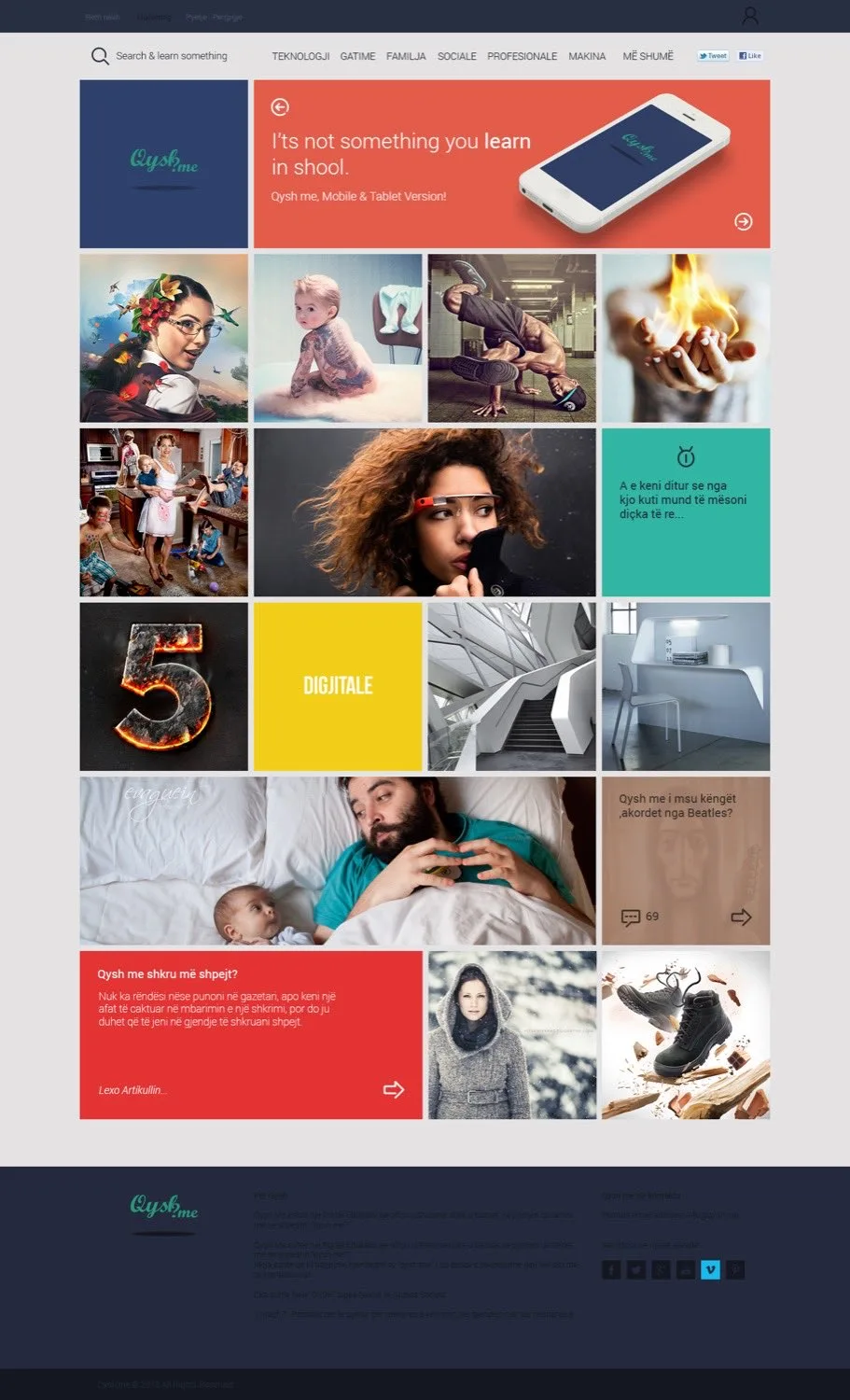
You can read the whole engine in that homepage. Every tile is a question someone actually asks. Laid out so the site is really just a wall of answers.
The very first one was literally a phone call from a relative. How do I open a Gmail account? So the first article was “Qysh Me Hape Llogari ne Gmail?”
We were not guessing at demand. We were writing down the questions people were already interrupting our day to ask.
A few hundred articles later that habit had turned into a catalog. It was working well enough that news sites like telegrafi.com started picking our pieces up, which sent a steady stream of readers back. Answering real questions did not just serve the people who asked. It made the whole thing spread.
The engine
- Collect questions from search, comments and everyday conversation, continuously
- Cluster them into topics, so one strong article could answer a whole family of related questions
- Prioritize by demand, writing the most-asked things first instead of the most fun
- Write the answer plainly, with the steps up front and the detail below
- Revisit and update, because a how-to that goes stale stops being useful
Why “answer” beats “publish”
A lot of content strategy is really just publishing. Filling a calendar.
Ours was built around answering. That reframing kept us honest. If an article did not clearly answer a question someone was actually asking, it did not get written. No matter how much we liked the idea.
And the payoff compounded. Genuinely useful answers kept pulling in readers through search long after we published them. Each one built trust that brought people back.
What I recommend
If you run any content operation, stop asking “what should we post this week?” Start asking “what are our people trying to figure out?”
Collect those questions relentlessly. Answer the most common ones better than anyone else. On Qysh Me, that discipline turned a blog into a resource people relied on. It is still how I think about content today.
Write a comment