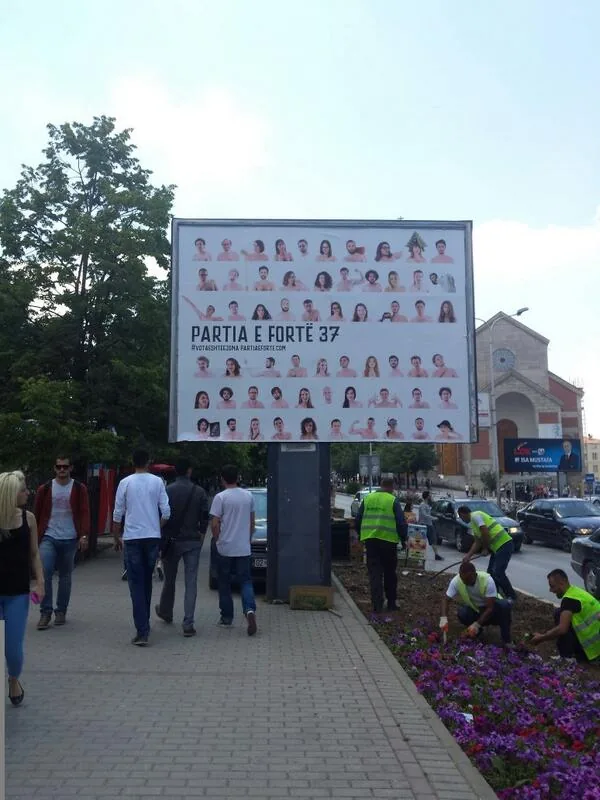
When the results of Kosovo’s 8 June 2014 parliamentary election were tallied, there was a number next to my name: 71 votes. You can find it in Koha’s breakdown of who did and did not win, candidate by candidate: Sa, kush (s’)ka fituar në zgjedhjet e 8 qershorit.
Seventy-one is not a number that changes a country. But I have thought about it more than any bigger number I have ever put up, because of what it is teaching me about the honest distance between attention and action.
Here is the thing I had to sit with. For two years I had helped build an audience for Partia e Fortë that ran into large numbers, an audience that laughed, shared and made the party one of the most talked-about things online in its moment. And when it came to votes counted next to my own name specifically, the figure was 71. That gap is the most important lesson in all of digital work. I got to feel it personally rather than read about it in a case study.
A few honest things I took from those 71 votes:
- A vote is the most expensive action you can ask for. A personal vote is more expensive still. People will happily like and share a candidate’s party while voting for a different name, or a bigger name, or the leader at the top of the list. Down at number ten, you are not where a protest vote naturally lands. The audience was the party’s; the individual votes distributed themselves the way they always do.
- Attention does not divide evenly. A movement can have huge collective reach and still see that reach concentrate on a few figures at the top when it converts to ballots. That is not a failure of the reach. It is just how conversion works. Pretending otherwise is how people fool themselves about their own numbers.
- Small real numbers beat large vanity ones. Seventy-one people actually walked into a booth and, among all the options, chose to put me there partly as a statement. I know exactly what that number cost to earn. I cannot say the same about a lot of the big engagement figures from those years.
The party itself did the thing that mattered at the collective level. I have written elsewhere about the seat it won in Pristina and why the conversion from likes to votes was the whole game. My 71 votes are a footnote to that story. But they are my footnote and they are on the public record and they taught me to be permanently suspicious of any metric I have not watched convert into something real.
If you are reading these out of order, the setup is here: candidate number ten and the survey I ran before the vote.
Write a comment