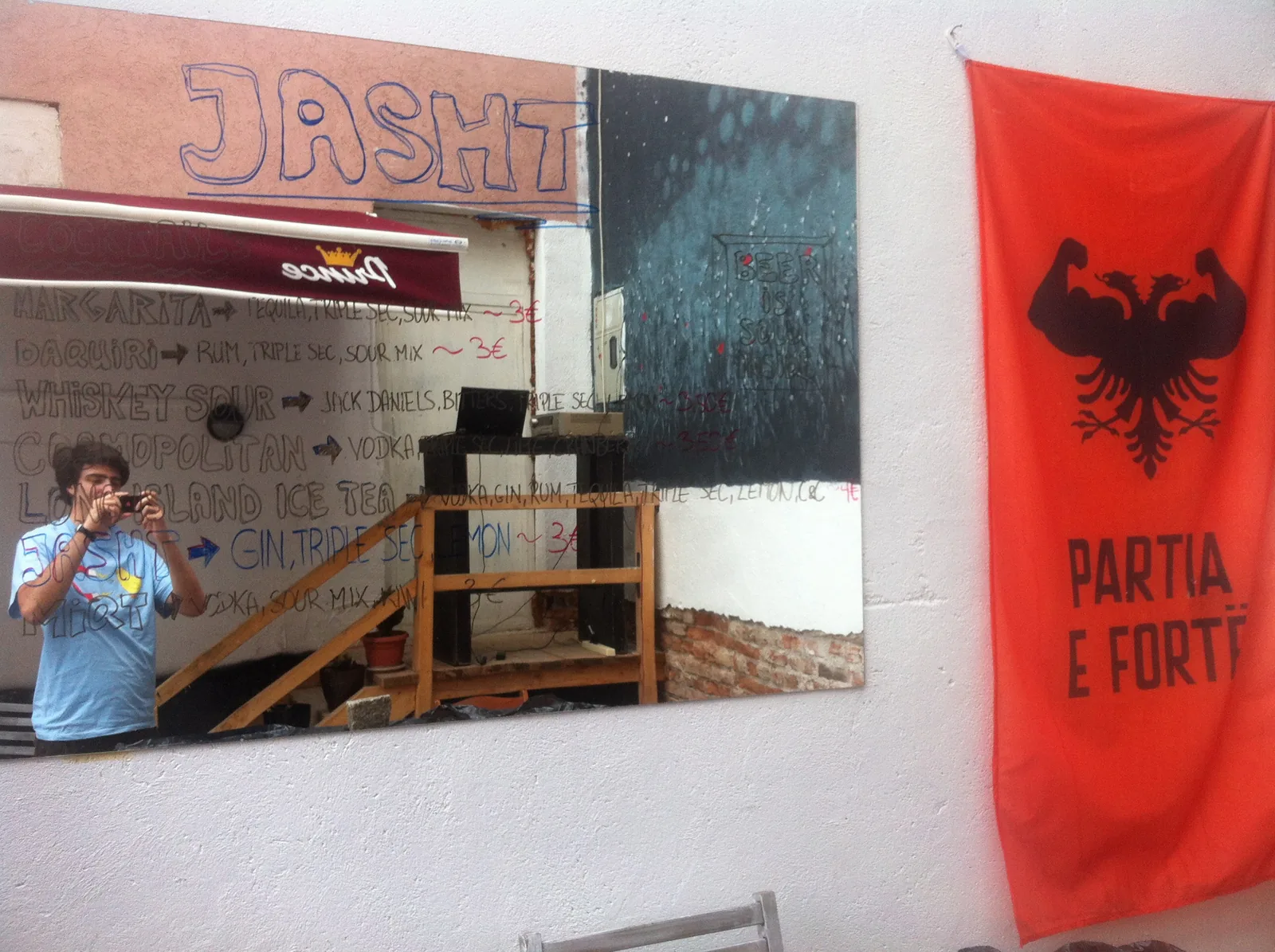
For most of its life, Partia e Fortë was an inside joke. Not a private one, it was public and loud, but it was inside in the sense that you had to know Kosovo to fully get it. The promises only landed if you recognized the real promises they parodied. So there was something genuinely strange about watching outlets from outside the region start to write about us.
Vice ran a piece introducing the party’s “legendary president” to an English-speaking audience: Meet the ‘Legendary President’ of Kosovo’s New Satirical Political Party. The literary site Full Stop published a longer, more reflective essay on how the whole thing came together: We Always Promise: The Making of Partia e Fortë. Suddenly the joke had readers who had never set foot in Pristina.
From where I sat, on the digital side, this was a fascinating problem, because international coverage is not the same audience as your home audience and it does not want the same thing. Our local followers wanted the joke, fast and in-character and unexplained. International readers wanted the story of the joke: how does a satirical party get more online support than serious ones, what does it say about the country, is it cynicism or hope. Those are different products.
I did not run our foreign press and I would not claim to have. But I am watching what happens to the message as it crosses the border. It is teaching me something. When your work travels to an audience that lacks the local context, the thing that survives the trip is not the specific jokes. Those are untranslatable; a promise that is devastating to a Kosovar is just a weird sentence to a stranger. What survives is the shape and the idea: a party that satirizes politics by out-politicking the politicians, built by young people online with no money. That premise is legible anywhere. The punchlines are not.
So the coverage flattened us, inevitably, into the premise. The international story was “clever satirical party, Balkans, internet.” All true, all much thinner than the actual thing, which was a specific response to a specific place at a specific moment. I do not say that with bitterness. It is just what happens when local work goes global. You trade depth for reach. Sometimes that trade is worth it, because the reach did something for us at home too. Being written about abroad made the party feel more real and more legitimate to people in Kosovo, which is a slightly absurd loop but a real one.
The lesson I am taking from it: know which layer of your work is exportable and which is not. Do not be surprised or hurt when the world takes the exportable layer and leaves the rest. The rest was never for them. It was for us and it was the part that mattered most.
For how the local audience actually converted, see from likes to votes. For how it ended, see what a satirical party’s ending taught me.
Write a comment