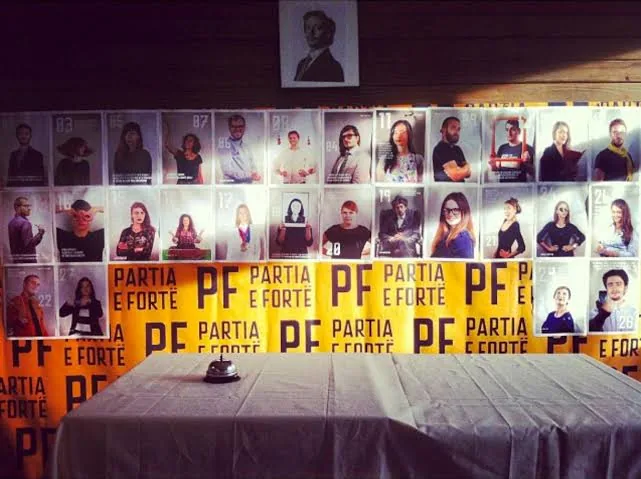
The uncomfortable question that hangs over every big social media following is: does any of it convert? You can have the whole internet laughing with you and still get zero votes, because a like costs nothing and a vote costs a trip to a polling station on a specific day. In the 2013 local elections, Partia e Fortë had to find out whether the joke had legs in the real world.
It did. We won a seat in the Municipal Assembly of Pristina. A satirical party, born on Facebook, promising to change absolutely nothing, put a representative into an actual chamber of local government. I still find that outcome a little unbelievable and I was there for it.
I do not want to overclaim my part in that. Winning a seat took a lot of people doing a lot of things I had nothing to do with, from legal registration to on-the-ground organizing. But the bridge from online audience to actual voter was partly a communications problem. Communications was my corner. So here is what that bridge actually required.
- Turn the joke into an instruction. For most of the campaign, our audience’s job was to laugh and share. In the run-up to the vote, the ask had to change to something concrete: here is the day, here is what to do, here is how a vote for us is the funniest and truest thing you can do. The tone stayed satirical. The call to action got specific.
- Give people a reason to vote that felt like theirs. Nobody votes for a joke out of obligation. They vote because it expresses something. Our whole message gave people a way to say “I am fed up with all of you” without cynicism, with a laugh. That feeling is what walked into the polling station.
- Make the offline feel continuous with the online. The party the voter met on the ballot had to be the exact same party they followed in the feed. Same voice, same confidence, same absurd promises. No pivot to being suddenly earnest. Consistency was the thing that made the online support feel real enough to act on.
The result mattered beyond the seat itself. This is the part I think about most. It proved the thing was not weightless. A movement that lives only online is easy for powerful people to wave away as noise, as kids messing about on the internet. A movement that converts to votes cannot be waved away. The seat gave the satire teeth. It meant the joke had been, all along, a real argument that real people agreed with enough to formalize with a ballot.
Everyone talks about the funnel from awareness to action. I am watching one of the strangest funnels imaginable actually close, in real time: from a laugh, to a share, to a follow, to a vote, to a seat. It is teaching me that attention is only ever potential energy. The work is converting it. The conversion is a different, harder job than the attention ever was.
(Related, once we take this into the 2014 parliamentary race: being number ten on the list and what my own 71 votes taught me.)
Write a comment