When your campaign is a joke, the numbers lie to you in a particularly seductive way. Funny things get shared. Shares feel like success. So it is very easy to mistake “people are laughing” for “the work is working,” and those are not the same thing. Some of the most useful thinking I did for Partia e Fortë was about which numbers to trust and which to ignore.
I will be upfront: I am not going to invent numbers to make a point look sharper. Where I do have a real figure I will point you to it, like the 454-person survey I ran before the 2014 election. Where I do not, I will tell you how I thought about measurement instead, which is the part that transfers anyway.
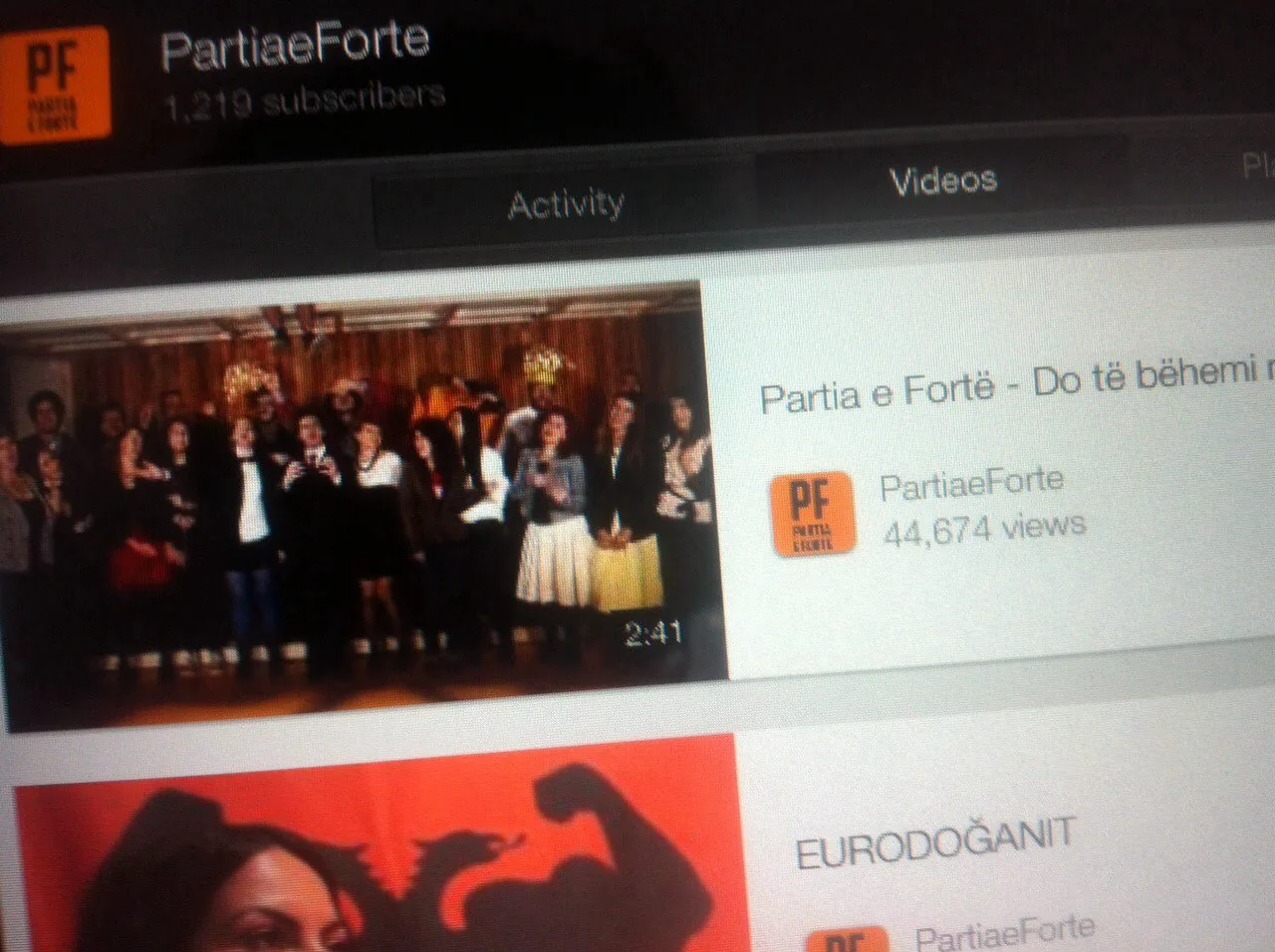
Here is a real number I do still have, because the screenshot survived: our YouTube channel had 1,219 subscribers. The campaign song on it had 44,674 views. I keep those two side by side deliberately, because the interesting figure is not either one alone, it is the gap between them. A subscriber count is your captive audience; a view count that dwarfs it by thirty-plus times means the thing escaped that audience and spread. When I looked at our numbers, that ratio was the one I actually cared about.
The trap was engagement for its own sake. A post could rack up reactions because it was funny while doing nothing for the actual purpose of the party, which was to hold the establishment to account and, eventually, to convert that attention into a real political result. Laughs were necessary but not sufficient. If I had optimized purely for laughs, I would have drifted toward safe, easy jokes and away from the sharper material that actually made a point.
So I tried to keep a few different questions in view at once:
- Reach versus resonance. How many people saw it mattered less than whether the right kind of person felt something. A post that reached fewer people but got them talking about the thing we were mocking was worth more than a bigger post about nothing.
- Shares over reactions. A reaction is a private nod. A share is a public endorsement, a person willing to put our joke in front of their own friends under their own name. Shares were the metric closest to real conversion, so I paid the most attention to them.
- Did it enter the conversation. The truest sign of impact was when our version of an event started showing up in places we did not put it, when people repeated our framing as if it were just the obvious way to see the thing. You cannot fully quantify that, but you know it when it happens.
- The only number that finally counted. In the end, the metric that settled every argument was the election. Votes are the least gameable number in the world. You cannot fake your way to a seat with engagement. When we won one in Pristina, that retroactively told me which of the softer signals had actually meant something.
The honest truth is that I am measuring in the dark more than I would like to admit, the way everyone is right now, in 2013. The tools are crude and the goal is unusual. But the instinct feels right. I am trying not to lose it: be suspicious of the metric that makes you feel good and keep asking what number would actually be embarrassing to be wrong about. For us that is votes. Whatever I end up doing after this, I suspect the discipline is the same. Do not let the applause become the scoreboard.
Write a comment