
Kosovo is one of the youngest countries in Europe by population and it is governed, overwhelmingly, by people who are not young. That gap is not a small detail. It is one of the central frustrations of an entire generation that watched the same faces run things for as long as they could remember. When Partia e Fortë built its list for the 2013 Pristina municipal election, we made that gap the point.
We fielded the youngest candidate list in the city. The average age of our candidates was 25.9. Bota Sot reported it at the time: Partia e Fortë me listën me moshë më të re për kuvend të Prishtinës. More than thirty percent of the list were women. Most of the candidates had higher education. Our vice-chair Zana Elshani presented it. Visar Arifaj led it as our candidate for mayor.
I want to be clear that this was strategy, not accident. In satire, the messenger is part of the message. A party mocking the political establishment cannot look like the establishment. If we had run a list of the usual middle-aged, mostly-male career figures, the joke would have been hollow, because we would have been the very thing we were laughing at. Running the youngest list in the city was the platform expressed as a fact about ourselves. The list was the argument.
This is the principle I am learning here, watching it work: your composition is your credibility. What a message says matters, but who is saying it and whether they visibly embody the claim, often matters more. You cannot credibly sell renewal from a room full of the old guard. You cannot credibly mock a closed elite while looking like one. We understood that the list itself, the ages and faces and gender balance on it, was a communication before anyone read a single promise.
On the digital side, this gave me a genuinely easy story to tell. The easiest stories to tell are the true ones. I did not have to spin. The youngest list in Prishtina, over thirty percent women, educated, running against a political class that had aged in place. That framing wrote itself and it spread because it landed on a frustration people already carried. The best messaging rarely creates a feeling. It names one that is already there and gives people a way to act on it.
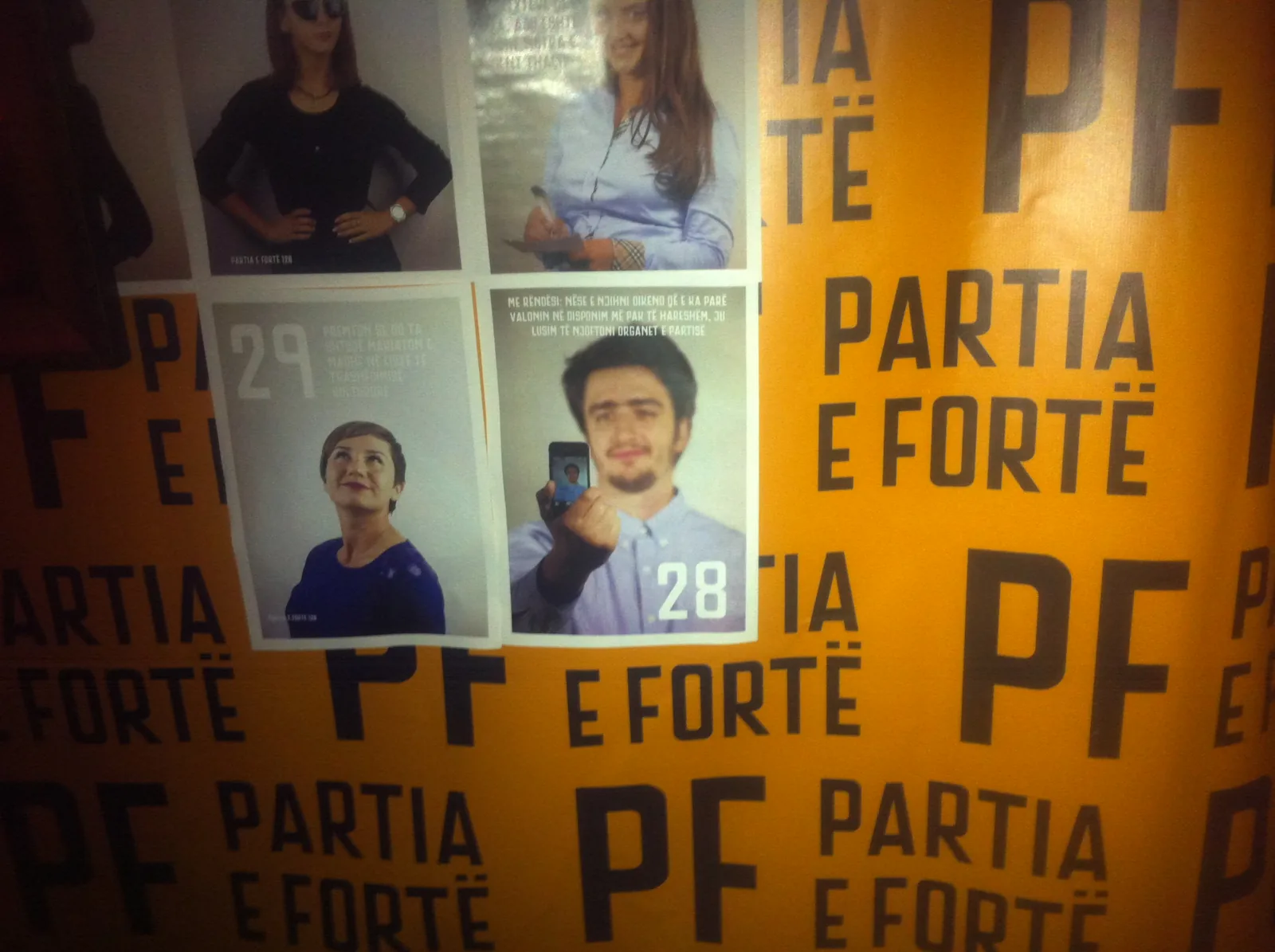
You can see the whole ethos in the candidate posters lined up together: young faces, each one numbered, each one undercutting itself with a caption in the party’s deadpan voice. It is the youngest list in the city rendered as a wall of gentle self-mockery, the exact opposite of the stern portraits the established parties hung.
There is a version of this that is just tokenism, young faces used as decoration by an operation that is old at heart. Ours was the opposite. The party was genuinely built and run by young people, online, with no money and no establishment backing. The list simply reflected what the thing actually was. That authenticity is why it worked. You can feel the difference between a movement that is young and one that is merely dressed as young. Audiences feel it faster than anyone.
Related: how we started, the anthem we launched and from likes to votes in that same election.
Write a comment